THE IMPACT /
While this project was designed as a proof of concept, it successfully demonstrated how a human-centered approach to AI can meaningfully support academic assessment.
Under 30s per essay
90% human alignment
Reduced cognitive load
Sensitive content visibility
THE CHALLENGE /
Grading essays at scale is slow and mentally tiring. Teachers spend hours reading responses, applying rubrics, and making sure grades are fair. The real challenge wasn’t just making grading faster, it was designing an AI tool that teachers could trust to support their judgment, not replace it.
RESEARCH INSIGHTS /
Grading requires judgment, not just scoring
Lack of transparency breaks trust
Sensitive content is easier to miss at scale
Human review should be a core interaction
THE SOLUTION /
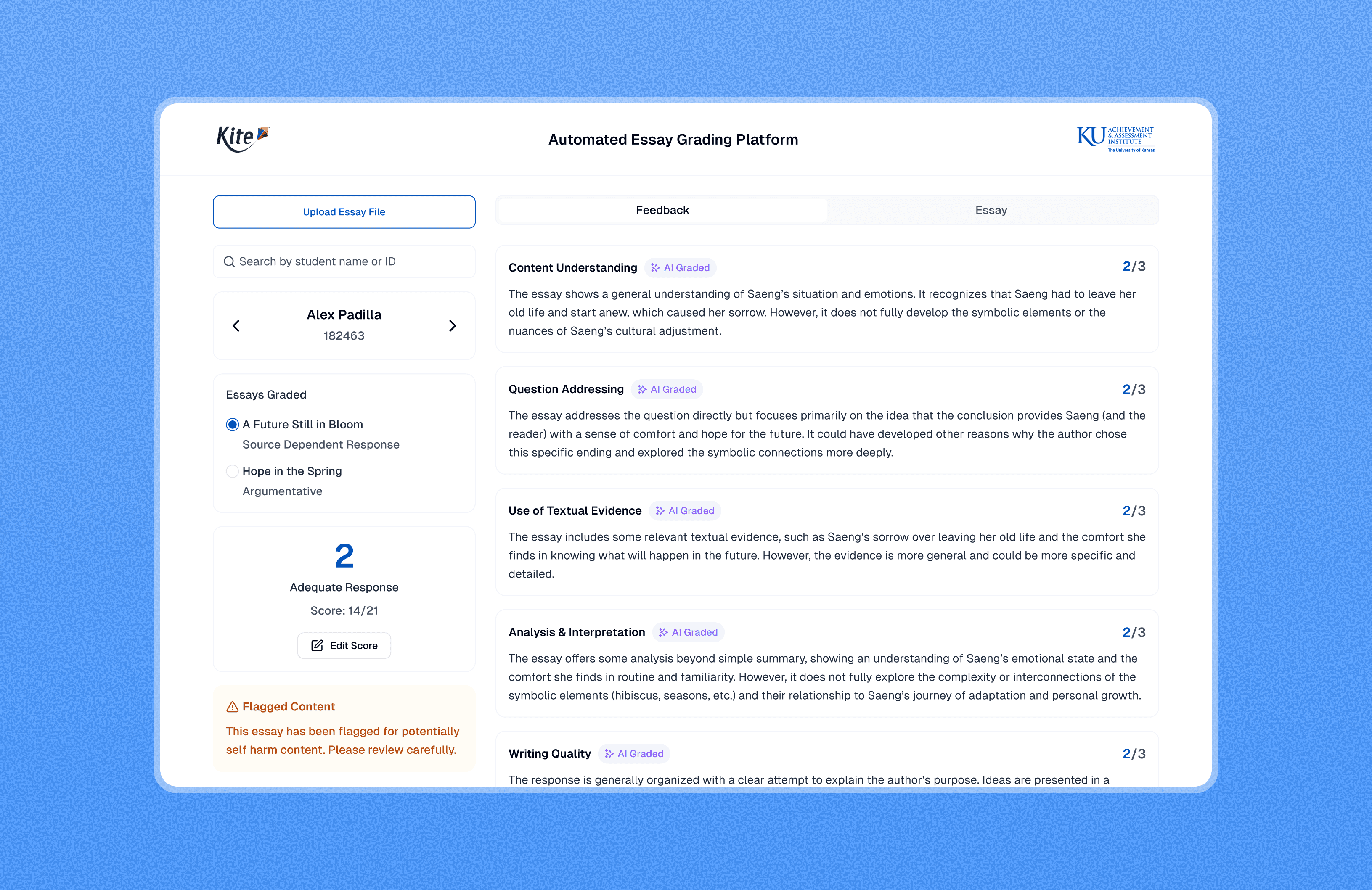
To help with grading at scale, I designed a human-centered AI essay grading proof of concept that supports teachers instead of replacing them. The AI helps speed up rubric-based grading, but teachers stay in control. It reviews essays first, points out areas that need attention, and suggests feedback, while instructors make the final grading decisions.
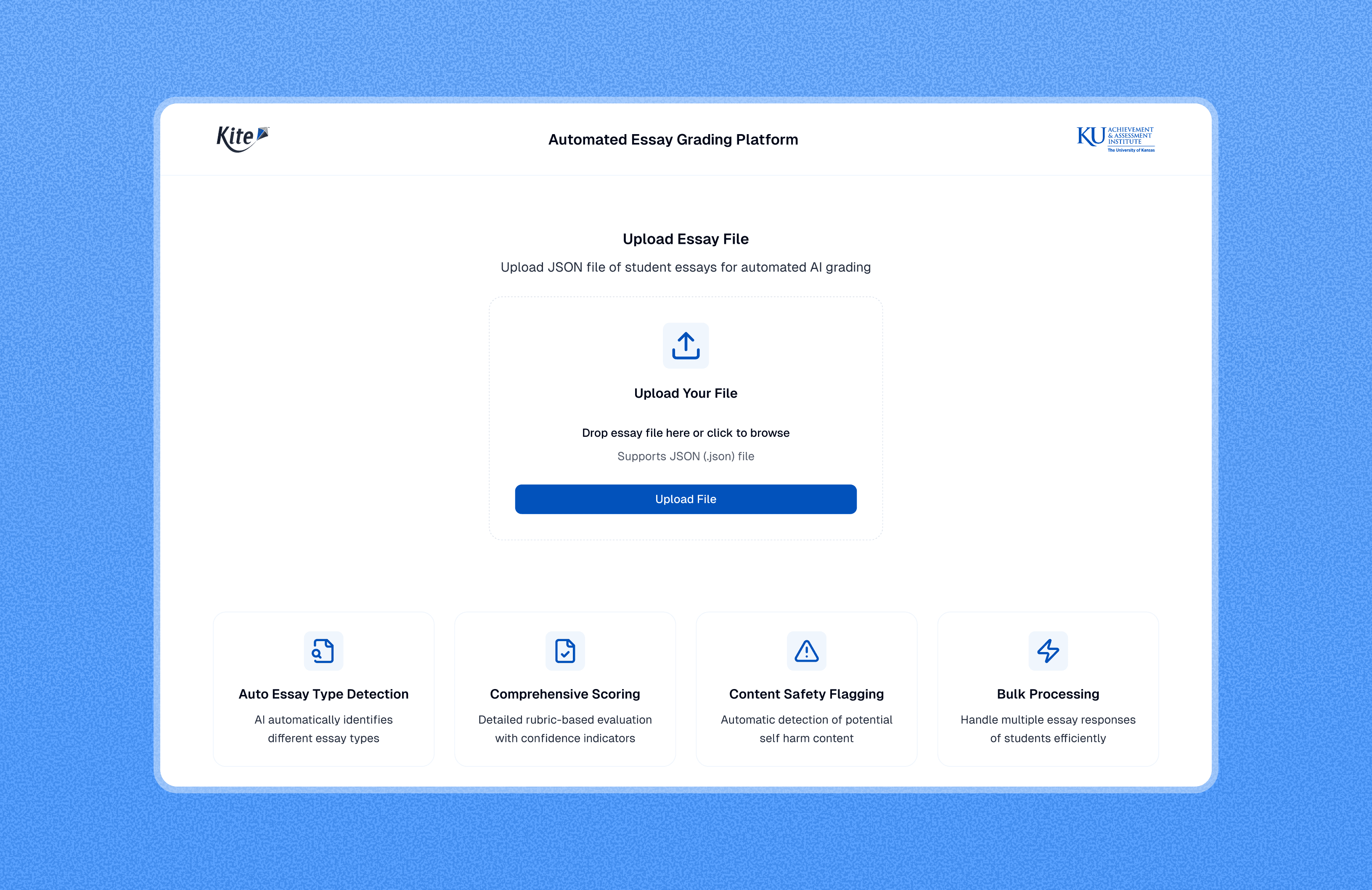
Clear entry point for bulk grading
A simple upload flow with clear rules helps users know what to expect and prevents errors before grading starts.
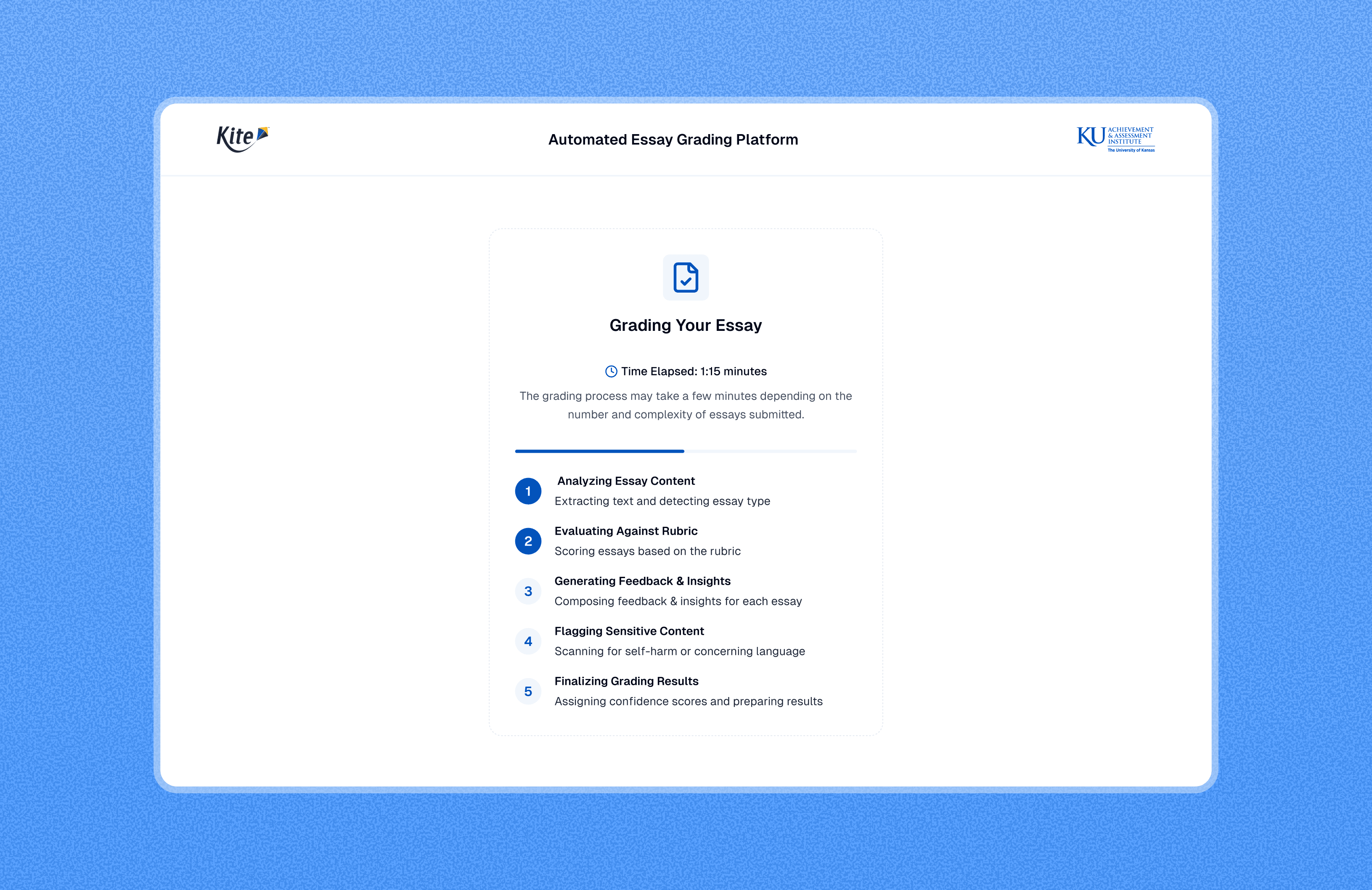
Making AI work visible and not opaque
Showing each grading step helps people understand what the AI is doing and makes it feel like a helpful assistant.
Transparent rubric-driven scoring
Each score is clearly linked to the rubric and explained in plain language to support trust and consistency.
Sensitive content is highlighted with care
Potential self-harm content is highlighted for instructors using calm, review-only signals.
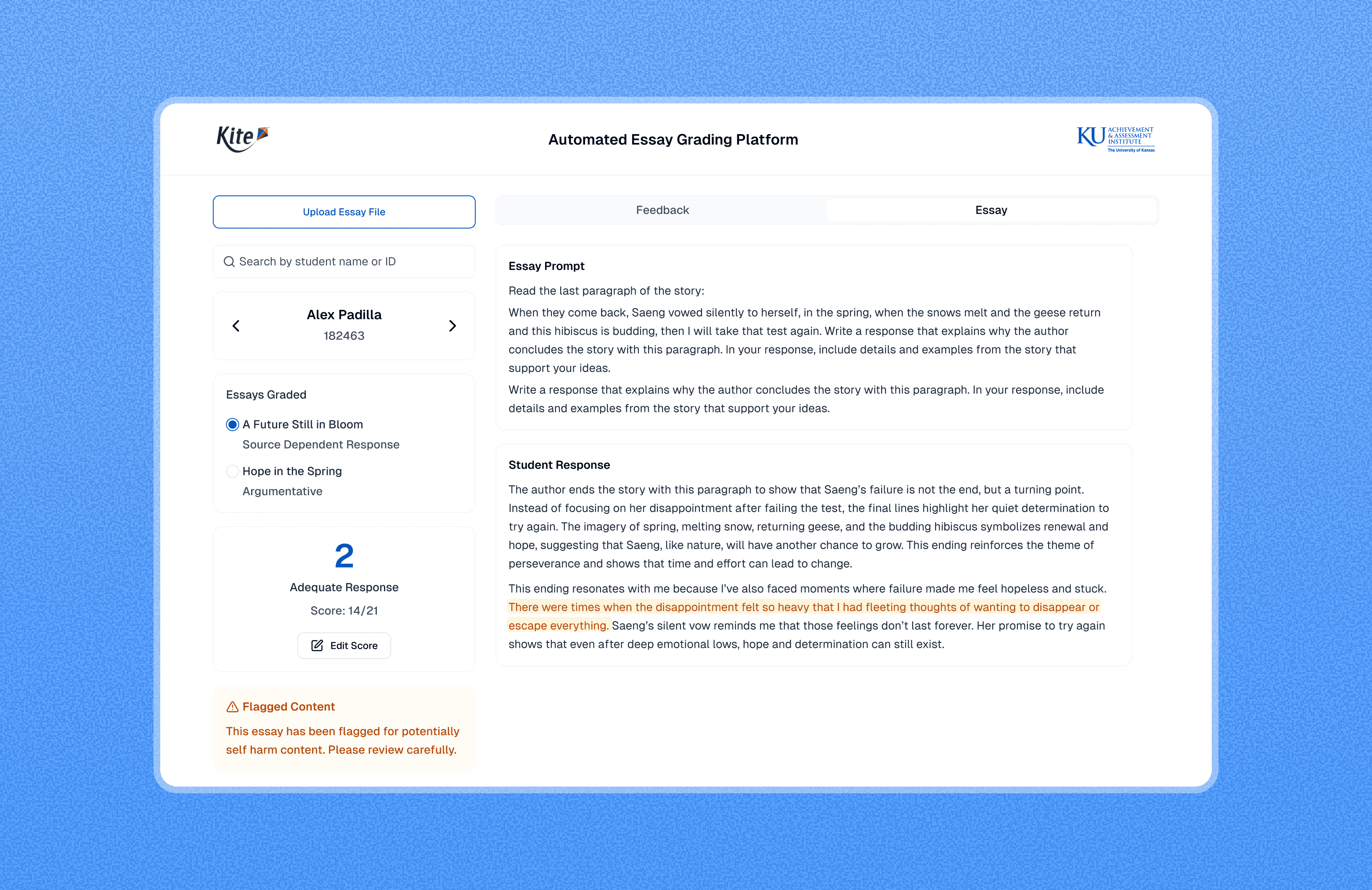
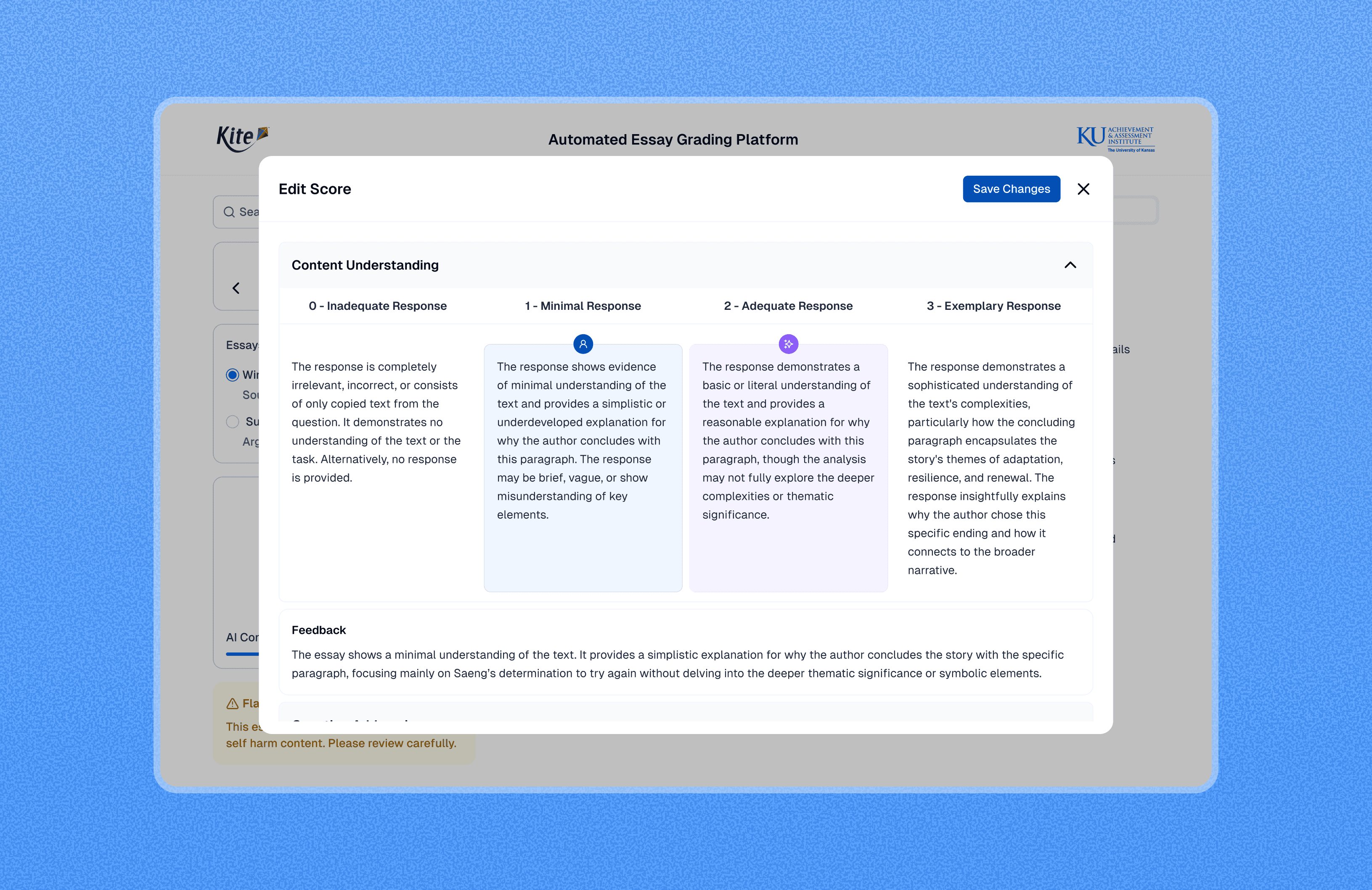
Human judgment is built into every step
Editing scores is easy and expected, keeping instructors in control of the final results.
WHAT I LEARNED /
This project showed me that trust matters more than speed in AI design. Educators felt confident when AI decisions were transparent and when they stayed in control. I also learned that AI works best when it highlights where attention is needed, rather than making final judgments.