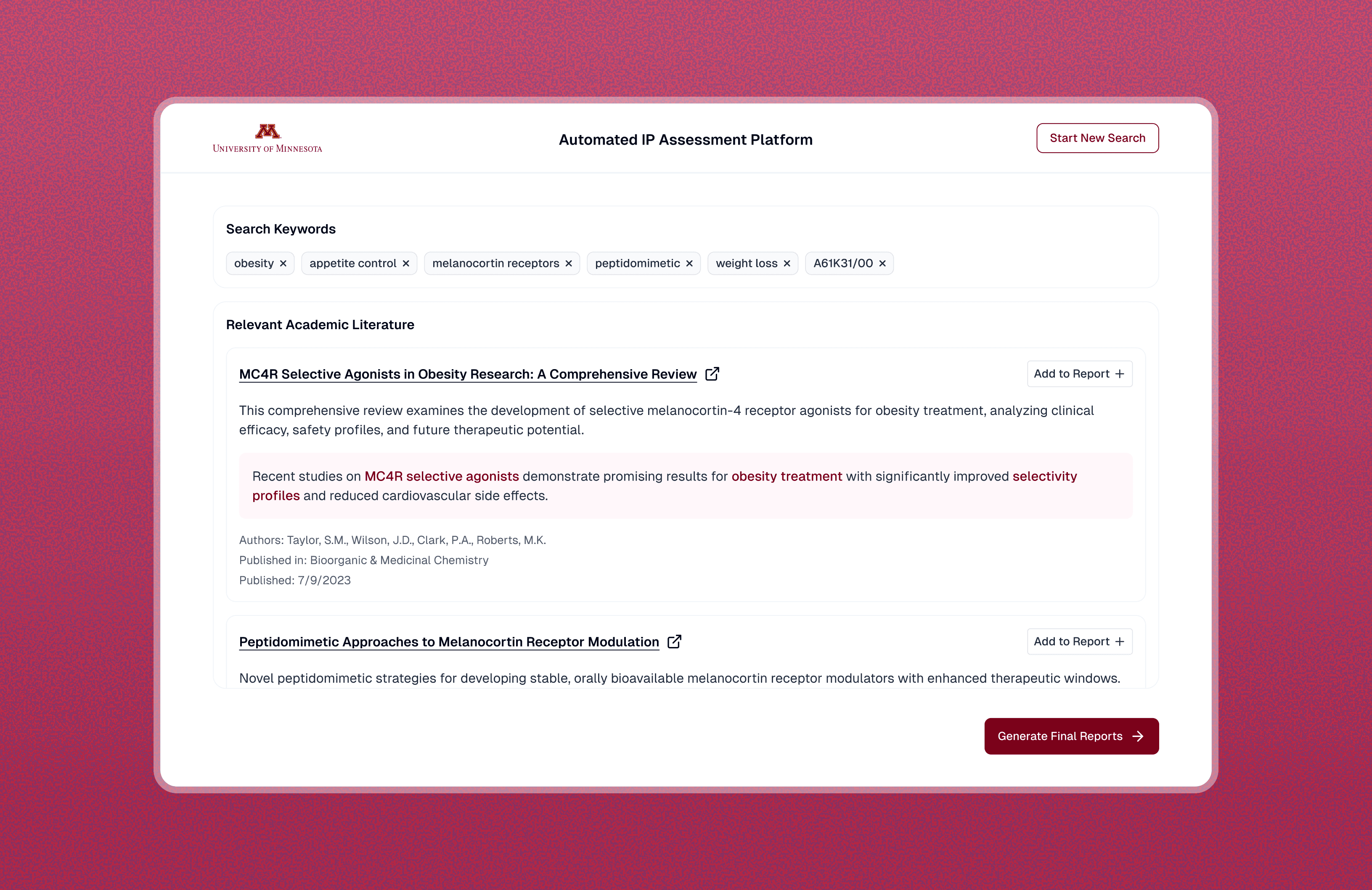
THE IMPACT /
While this project was designed as a proof-of-concept, the project demonstrates how AI can meaningfully accelerate early-stage intellectual property evaluation without compromising academic rigor or expert judgment.
6 weeks to under 25 mins
85%+ expert alignment
Reduced cognitive load
Increased throughput
THE CHALLENGE /
Reviewing new inventions takes a lot of time, focus, and expertise, often stretching over several weeks for each disclosure. Reviewers have to balance patent research, novelty checks, and commercial potential while making high-stakes decisions. The challenge was designing an AI experience that could support their work without replacing expert judgment.
RESEARCH INSIGHTS /
Getting up to speed took the most time
Explainability drove trust than accuracy
Consistency mattered more than automation
Human control increased confidence
THE SOLUTION /
I designed a proof-of-concept AI-assisted platform to speed up a process that usually takes about six weeks. The system organizes invention disclosures, finds similar existing patents and research, and creates early commercialization summaries in one workflow. It is designed to be transparent and reviewer-led, showing how early IP evaluation can happen in under 30 minutes without replacing expert judgment.
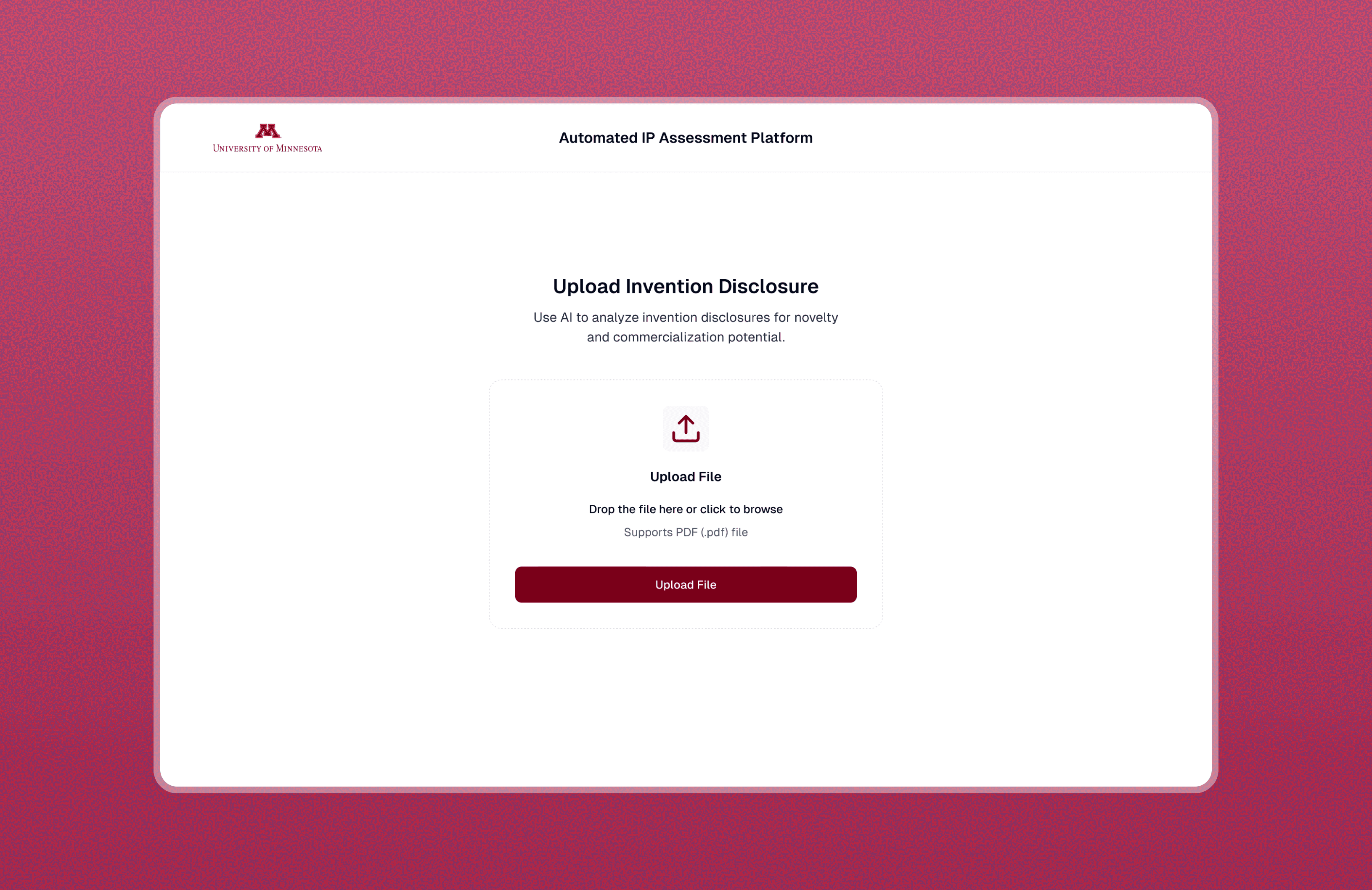
Upload an invention disclosure
Reviewers upload an invention disclosure and trigger AI analysis to begin the review process.
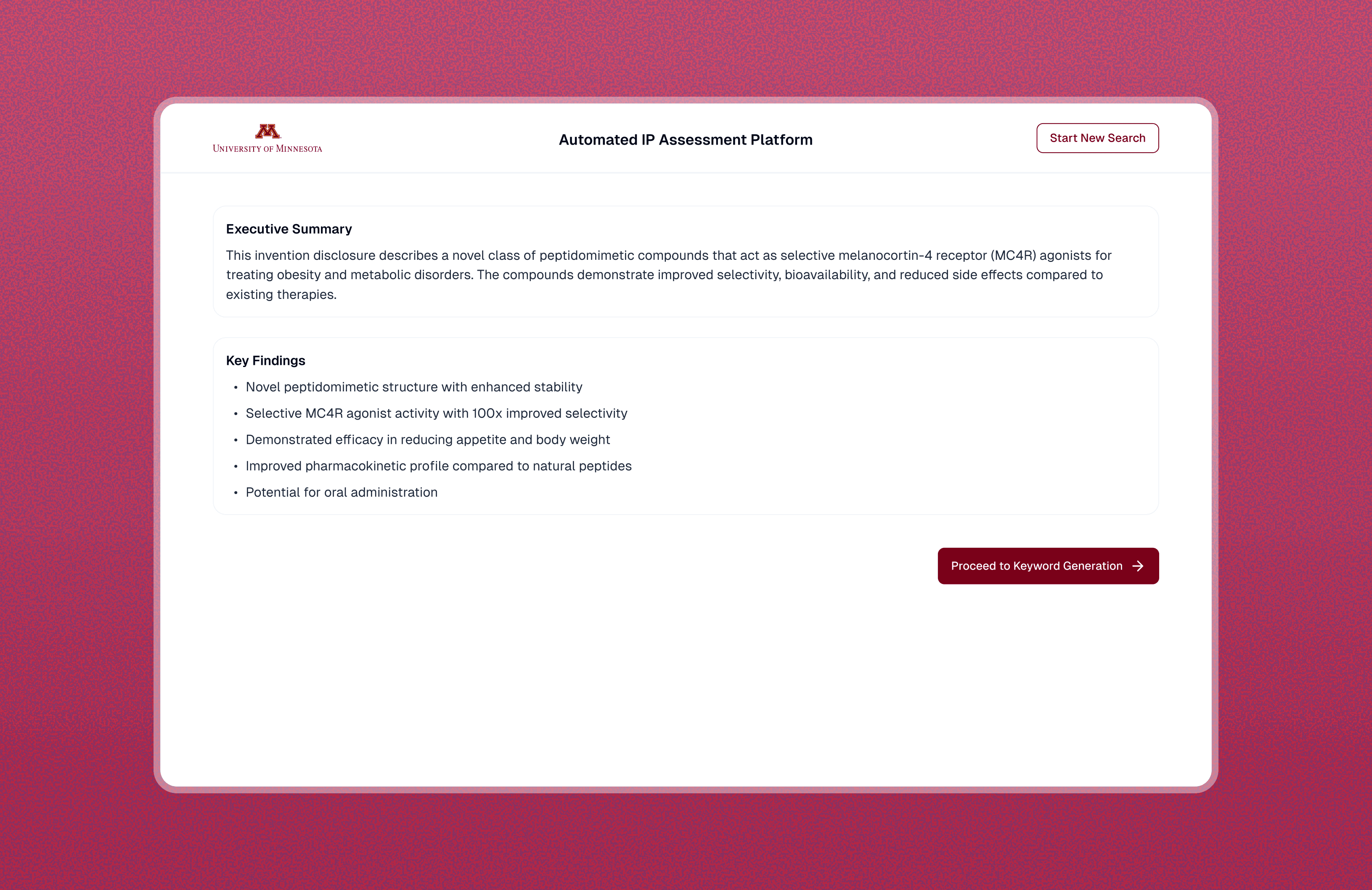
Quick overview of the invention
AI summarizes the executive summary and key findings so that reviewers can understand the invention quickly.
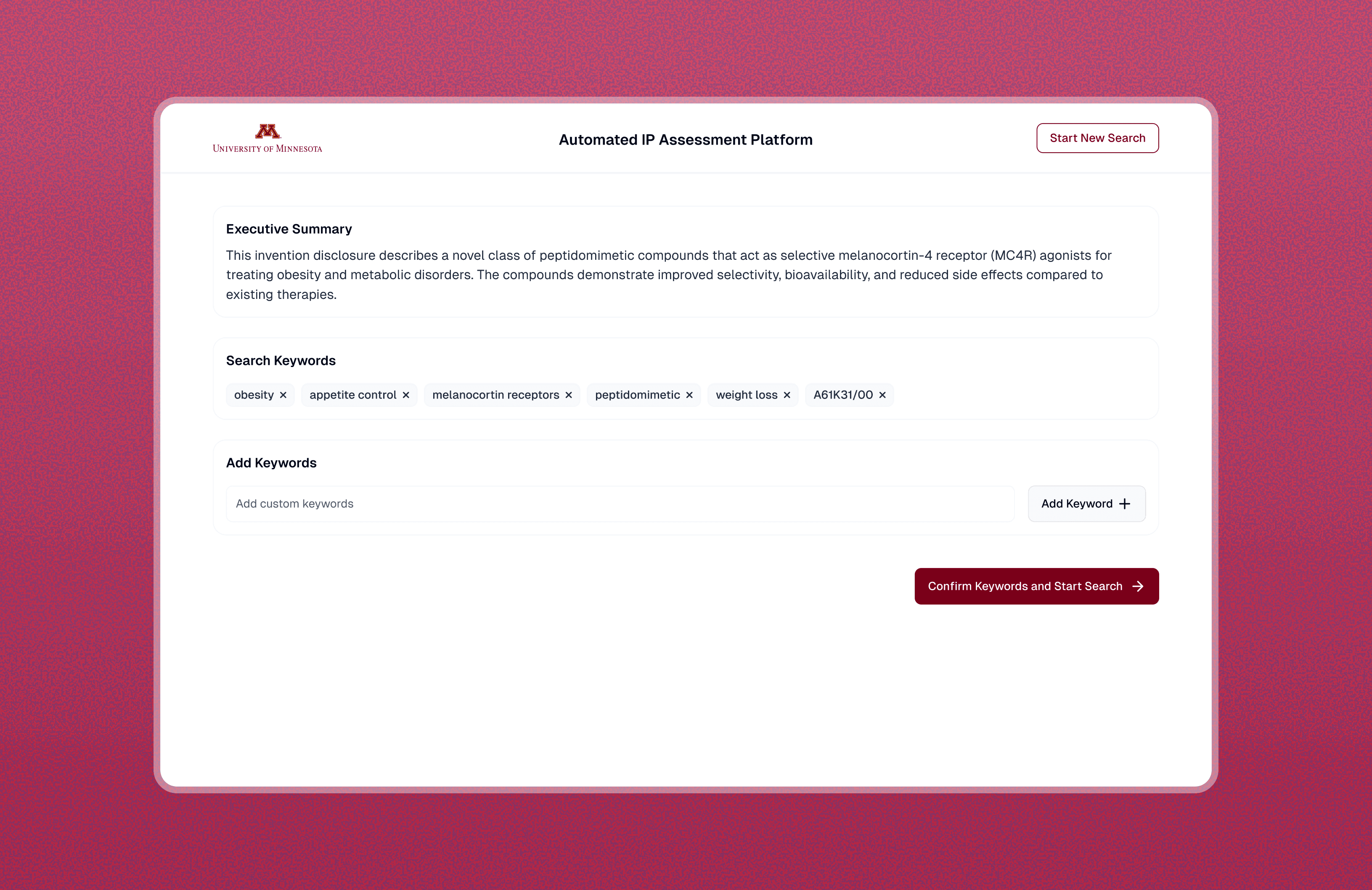
Search terms suggested by AI
The system suggests keywords based on the disclosure, which reviewers can edit to improve the further searches.
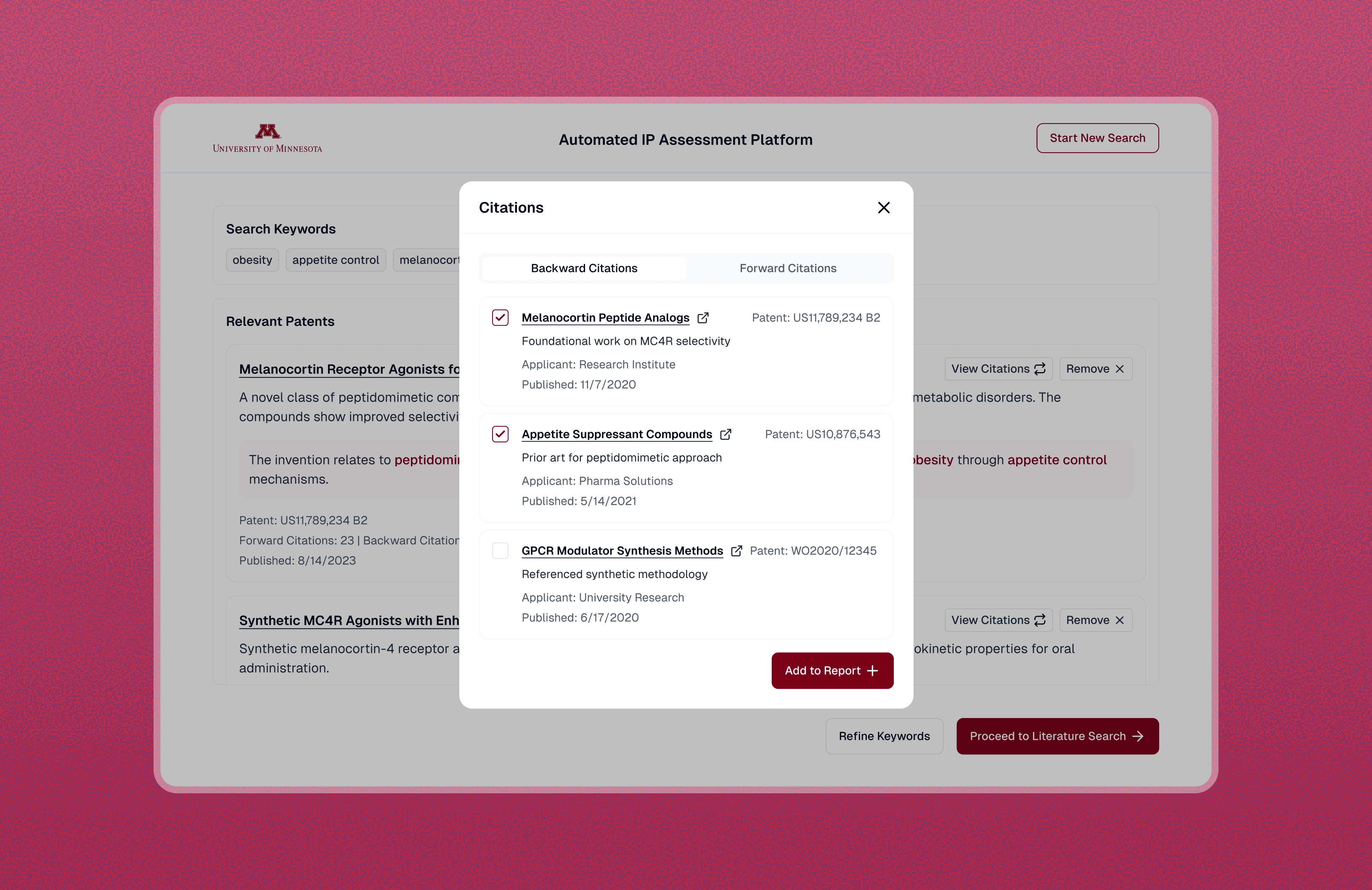
Review and select important references
Reviewers explore patent citations and choose which ones matter most for the evaluation.
Academic literature search
The system finds relevant academic papers to capture prior work beyond patents.
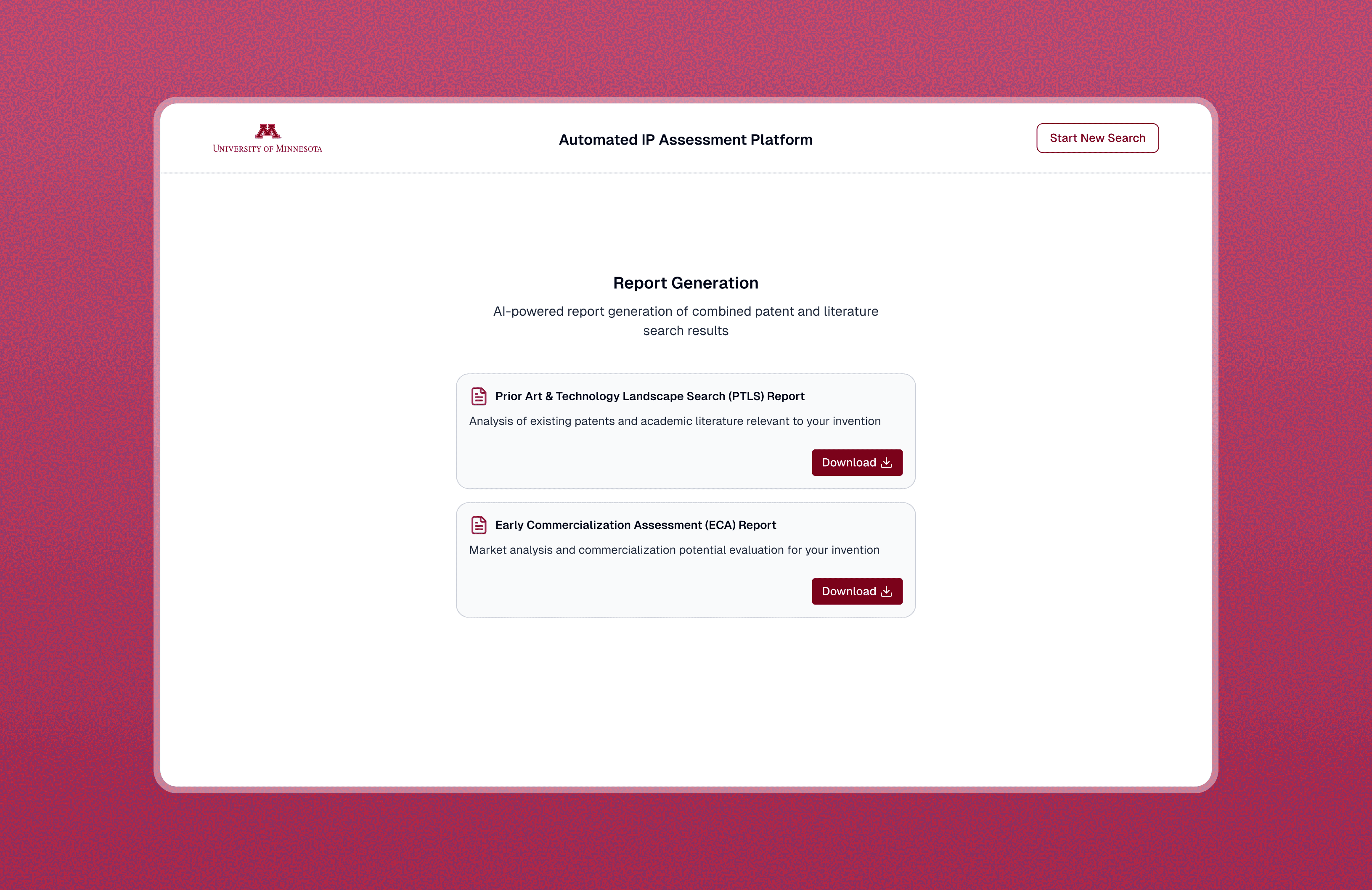
Generate review-ready summaries
AI creates structured reports that reviewers can use for internal discussions and next steps.
WHAT I LEARNED /
I learned that trust is more important than speed when designing AI for high-stakes work. Helping experts understand information and stay in control was more valuable than full automation. Overall, the project reinforced that AI works best as a partner that supports expert judgment, not as a replacement for it.