THE IMPACT /
Luma helped cancer patients report treatment side effects more easily and consistently, even when they were tired or unwell. By reducing the number of questions, adapting to patient input, and encouraging regular check-ins, Luma improved the quality and reliability of symptom data shared with clinicians. This led to clearer visibility into patient health and faster clinical response when it mattered most.
Simplified 80+ symptom question
Reduced reporting time by 90%
~20% increase in repeat use
Reduction in false negative reporting
THE CHALLENGE /
Cancer patients are often asked to report side effects using the PRO-CTCAE (Patient-Reported Outcomes version of the Common Terminology Criteria for Adverse Events), usually a paper form with 80+ medical questions. When patients are tired or unwell, filling out long forms is difficult, leading to skipped or delayed symptom reporting. The challenge was to replace this heavy process with a simple and supportive way for patients to report symptoms while still giving doctors reliable clinical information.
RESEARCH INSIGHTS /
Long forms are overwhelming
More questions leads to drop-offs
Static forms lead to false negatives
Gamification drives repeat use
THE SOLUTION /
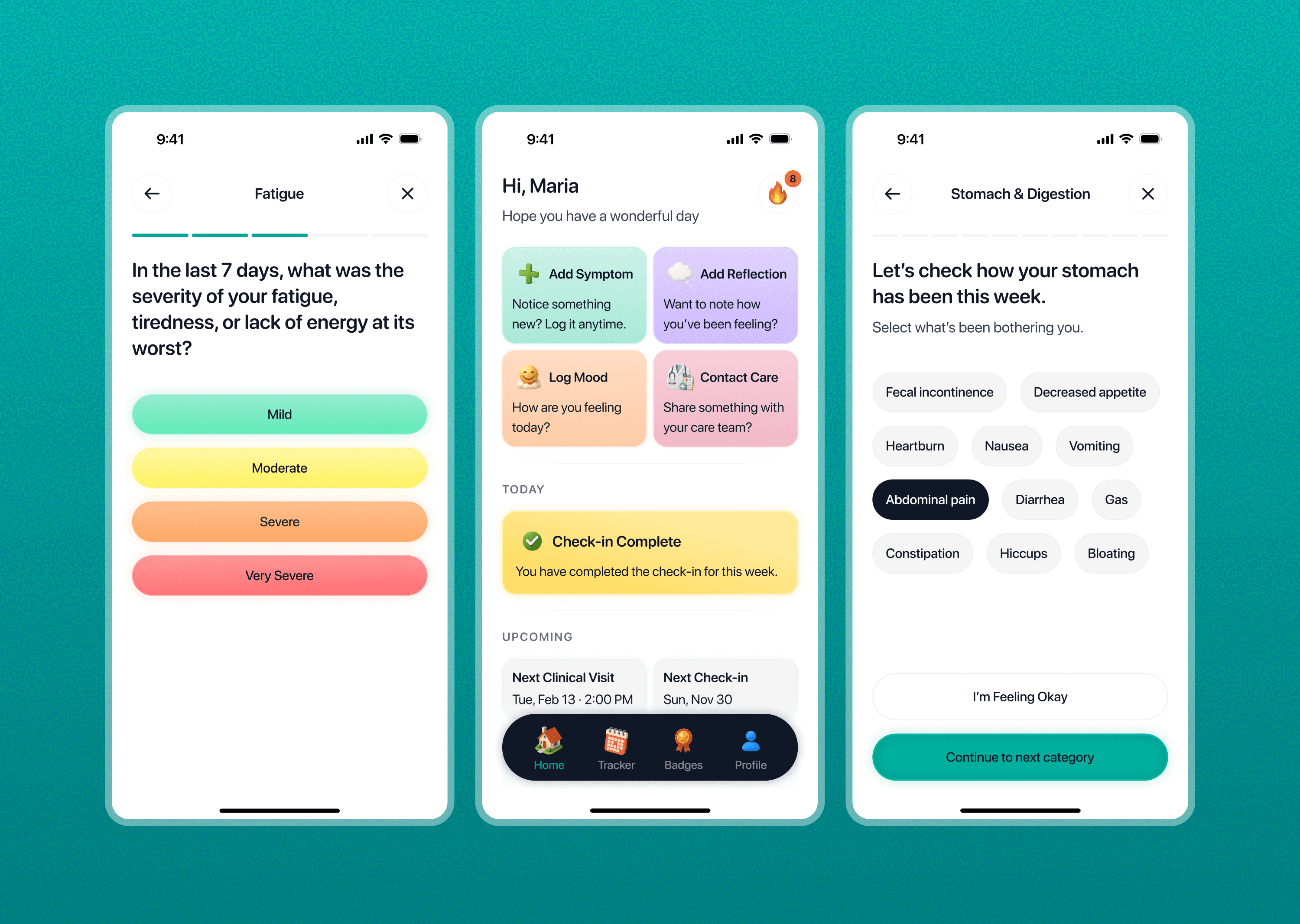
I designed Luma, a patient-centered symptom reporting experience that helps cancer patients log treatment side effects in a simple and supportive way. Symptom questions dynamically branch based on patient selections, ensuring key symptoms aren’t missed and reducing false negatives. Luma uses simple language, voice input, and light gamification to encourage regular reporting while delivering reliable, structured data to doctors.
Weekly Check-In
Luma helps patients complete a weekly check-in to report symptoms and overall well-being. The flow adapts based on their responses, making reporting quick and manageable.

Add Symptom
Patients can add symptoms anytime they occur and need not wait for the weekly check-in. This helps prevent missed symptoms and gives doctors more accurate, up-to-date information.

Add Reflection
Patients can share how they are feeling emotionally in their own words. This helps care teams better understand the patient’s mental well-being alongside physical symptoms.

Log Mood
Patients can quickly log how they are feeling using simple options. This helps track emotional well-being over time and gives care teams better context for patient care.

Tracker
Patients can view their symptoms, moods, and reflections over time in one place. This helps them spot patterns and supports better conversations with their care team.

Contact Care
Luma acts as a first point of contact for patients. It helps them understand when a symptom needs medical attention and guides them to reach their care team if the issue is serious.

WHAT I LEARNED /
Working with physicians at Mayo Clinic and learning from patients showed me how important collaboration is in healthcare design. Doctors helped define safety rules and what information they need, while patients shared how tired, stressed, or overwhelmed they often feel. This project taught me that good HealthTech design must balance clinical needs with human needs, and that small UX choices can make a real difference in patient care.